
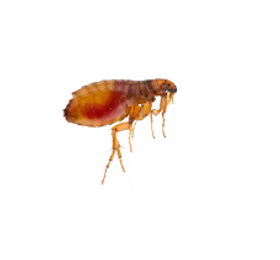
Fleas
Fleas have one specialized talent, that talent it to torment mankind.
Bite Identification & Itch Relief:
The flea’s bite is a “red dot” produced where the mouthparts of the fleas penetrate the skin. The bite causes an itch, it is recommended to use menthol, camphor, carbolated Vaseline or calamine lotion to relieve itching. In times past quinine or thiamine hydrochloride by mouth or injection was recommended for sensitive individuals. Today, if you are sensitive, consult your physician.
THE SUPER VECTOR
The flea’s greatest claim to fame is transmitting diseases. The flea is forever related to the rat in the transmission of diseases. A number of infections can be acquired by handling infected kittens, i.e. Murine Typhus, transmitted by the cat flea. Fleas and other insects are vectors of (Pasteurella Tularensis) which is the bacterium responsible for tularemia. They are also responsible for the “tapeworm” found in humans and animals. Transmited by the adult dog flea.
Brill’s Disease:
This disease is a mild form of Rickettsia prowazeki, that is spread rapidly by the human louse, Pediculus Humanus, in effect a human flea. In the 21st Century, fatal diseases from fleas in the United States are extremely rare. This is a result of the pest control industry that is constantly eradicating fleas. Also, educating homeowners, business owners and industrial management about how to prevent this problem.
Scientific technology continued to improve until fleas disappeared as a major problem for over a decade. However, today they are reappearing in great numbers. This is due to the fleas amazing adaptability with increased immunity to certain classes of insecticides. “As long as animals are found in human living areas, there will be fleas in the area.” Fleas will oviposit from 3 to 18 eggs per laying until laying over 400 eggs in approximately 6 months. This factor explains why fleas are more noticeable during mating seasons.
Fleas mature in stages from egg, larva, pupa to adult, this is known as complete metamorphosis. Understanding the life cycle of a flea will help determine the correct EPA approved insecticide and/or insect growth regulator for flea elimination.
Bite Identification & Itch Relief:
The flea’s bite is a “red dot” produced where the mouthparts of the fleas penetrate the skin. The bite causes an itch, it is recommended to use menthol, camphor, carbolated Vaseline or calamine lotion to relieve itching. In times past quinine or thiamine hydrochloride by mouth or injection was recommended for sensitive individuals. Today, if you are sensitive, consult your physician.
THE SUPER VECTOR
The flea’s greatest claim to fame is transmitting diseases. The flea is forever related to the rat in the transmission of diseases. A number of infections can be acquired by handling infected kittens, i.e. Murine Typhus, transmitted by the cat flea. Fleas and other insects are vectors of (Pasteurella Tularensis) which is the bacterium responsible for tularemia. They are also responsible for the “tapeworm” found in humans and animals. Transmited by the adult dog flea.
Brill’s Disease:
This disease is a mild form of Rickettsia prowazeki, that is spread rapidly by the human louse, Pediculus Humanus, in effect a human flea. In the 21st Century, fatal diseases from fleas in the United States are extremely rare. This is a result of the pest control industry that is constantly eradicating fleas. Also, educating homeowners, business owners and industrial management about how to prevent this problem.
Scientific technology continued to improve until fleas disappeared as a major problem for over a decade. However, today they are reappearing in great numbers. This is due to the fleas amazing adaptability with increased immunity to certain classes of insecticides. “As long as animals are found in human living areas, there will be fleas in the area.” Fleas will oviposit from 3 to 18 eggs per laying until laying over 400 eggs in approximately 6 months. This factor explains why fleas are more noticeable during mating seasons.
Fleas mature in stages from egg, larva, pupa to adult, this is known as complete metamorphosis. Understanding the life cycle of a flea will help determine the correct EPA approved insecticide and/or insect growth regulator for flea elimination.